


On Cross-Sectional Forms of Axially Loaded Members
Jun 09, 2026
Leave a message

Axially loaded members serve as the core load-bearing units in engineering structures. The choice of cross-sectional form directly determines a member's load-bearing capacity and stability, making it crucial for ensuring structural safety; cross-section designs tailored to specific scenarios allow these members to fully leverage their performance advantages.
I. Solid-Web Cross-Sections
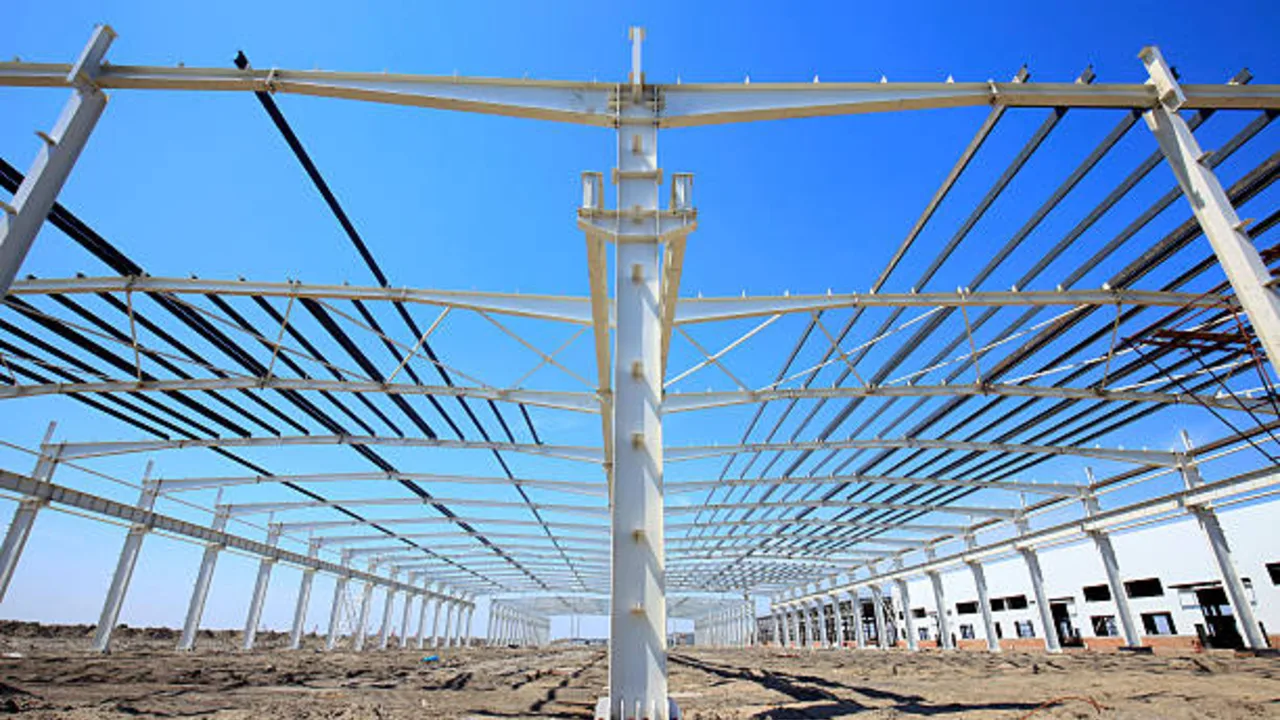
Solid-web cross-sections are a common form for axially loaded members, characterized by widespread application and clear structural behavior. I-shaped sections utilize efficient material distribution-concentrating material away from the neutral axis-to significantly enhance bending and compressive strength; they are frequently employed in applications such as steel columns for industrial plants and supports for high-rise buildings, ensuring efficient load-bearing while saving material. Circular sections offer the advantage of isotropic structural behavior; under axial compression, stress is distributed uniformly. Commonly used in axially loaded members for towering structures and power transmission towers, they effectively resist multidirectional loads and enhance structural stability.
II. Latticed Cross-Sections
Latticed cross-sections are well-suited for axially loaded members in large-span and heavy-load applications. These sections consist of individual chords (or branches) connected by lacing members; by strategically arranging the chords to concentrate material at the outer edges, the design significantly increases the moment of inertia while reducing self-weight, ensuring stability under heavy loads. For instance, the chords of large truss bridges and the masts of heavy-duty lifting equipment often utilize latticed sections. This approach meets load-bearing requirements and reduces material consumption, aligning perfectly with the structural demands of heavy-load scenarios.
Send Inquiry