


What are the dynamic load - testing methods for a steel structure bridge?
May 14, 2025
Leave a message
Dynamic load testing is a crucial process for assessing the performance and safety of steel structure bridges. As a steel structure bridge supplier, we understand the significance of these tests in ensuring that our bridges can withstand the real - world forces they will encounter over their lifespan. In this blog, we will explore the various dynamic load - testing methods for steel structure bridges.
1. Ambient Vibration Testing
Ambient vibration testing is a non - destructive method that uses the natural vibrations of the bridge caused by ambient sources such as wind, traffic, and ground motion. This method is relatively simple and cost - effective, as it does not require the application of artificial loads.
The basic principle of ambient vibration testing is to measure the bridge's response to these ambient excitations. We use sensors, typically accelerometers, which are strategically placed on the bridge structure. These sensors record the acceleration data at different points on the bridge. By analyzing the frequency content of the recorded acceleration signals, we can identify the natural frequencies, mode shapes, and damping ratios of the bridge.
Natural frequencies are the frequencies at which the bridge will vibrate freely if it is set into motion. They are determined by the mass, stiffness, and geometry of the bridge. Mode shapes describe the deformation patterns of the bridge at its natural frequencies. Damping ratios represent the ability of the bridge to dissipate energy during vibration.
The advantage of ambient vibration testing is that it can be carried out without disrupting the normal use of the bridge. However, it has some limitations. The ambient excitations are usually small and random, which may result in low - quality data. Also, it can be difficult to accurately determine the higher - order mode shapes and frequencies.
2. Forced Vibration Testing
Forced vibration testing involves applying a known dynamic load to the bridge and measuring its response. This method allows for more controlled testing conditions compared to ambient vibration testing.
There are several ways to apply the forced load. One common method is to use a shaker. A shaker is a device that can generate a sinusoidal or random force. The shaker is attached to the bridge at a specific location, and it applies a force with a known frequency and amplitude. By varying the frequency of the applied force, we can sweep through a range of frequencies and identify the natural frequencies of the bridge.
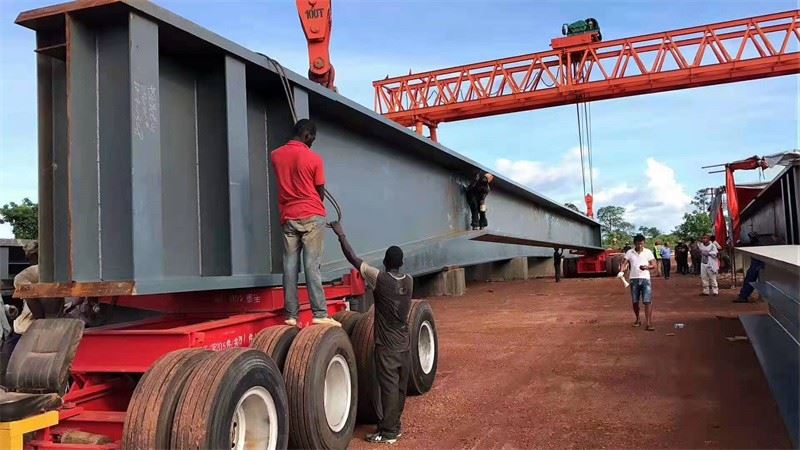
Another way to apply a forced load is through impact testing. In impact testing, a heavy mass is dropped onto the bridge deck or a hammer is used to strike the bridge structure. The impact generates a short - duration dynamic load, and the response of the bridge is measured using sensors. Impact testing is relatively simple and can quickly provide information about the bridge's dynamic properties.
Forced vibration testing can provide more accurate and detailed information about the bridge's dynamic behavior compared to ambient vibration testing. However, it is more complex and expensive to carry out. It also requires the bridge to be temporarily closed to traffic during the testing process.

3. Traffic - Induced Vibration Testing
Traffic - induced vibration testing uses the normal traffic flow on the bridge as the source of dynamic excitation. This method is practical because it does not require any additional equipment to generate the load, and it reflects the real - world loading conditions on the bridge.
We install sensors on the bridge to measure the vibration response caused by the passing vehicles. The data collected can be used to analyze the bridge's dynamic behavior under traffic loads. For example, we can study the influence of vehicle speed, weight, and type on the bridge's vibration.
One of the challenges of traffic - induced vibration testing is that the traffic flow is variable and unpredictable. Different vehicles have different weights, speeds, and tire characteristics, which can lead to complex vibration patterns. To address this issue, we can use statistical methods to analyze the large amount of data collected over a period of time.
4. Wind - Induced Vibration Testing
Wind can cause significant dynamic loads on steel structure bridges, especially for long - span bridges. Wind - induced vibration testing aims to evaluate the bridge's response to wind loads.
We can use wind tunnel tests to simulate different wind conditions. In a wind tunnel, a scaled model of the bridge is placed, and the wind is generated to flow around the model. Sensors are installed on the model to measure the forces and displacements caused by the wind. By varying the wind speed, direction, and turbulence intensity in the wind tunnel, we can study the bridge's aerodynamic behavior.
In addition to wind tunnel tests, field measurements can also be carried out on the actual bridge. We install anemometers to measure the wind speed and direction, and accelerometers to measure the bridge's vibration response. Field measurements can provide real - time data on the bridge's behavior under actual wind conditions.
Application in Our Steel Structure Bridges
As a steel structure bridge supplier, we offer a variety of bridge types, including Steel Structure Truss Bridge, Steel Structure Cable - Stayed Bridge, and Steel Structure Mobile Bridge. Each type of bridge has its own unique dynamic characteristics, and the appropriate dynamic load - testing method needs to be selected based on the bridge's design, location, and expected usage.
For example, for a steel structure truss bridge, ambient vibration testing can be a good initial method to quickly assess its overall dynamic properties. If more detailed information is required, forced vibration testing can be carried out. For a long - span steel structure cable - stayed bridge, wind - induced vibration testing is crucial due to its high susceptibility to wind loads. Traffic - induced vibration testing is also important for all types of bridges to ensure their performance under normal traffic conditions.
Importance of Dynamic Load Testing
Dynamic load testing is essential for several reasons. Firstly, it helps us to verify the design assumptions. During the design process, engineers make certain assumptions about the bridge's dynamic behavior. Dynamic load testing allows us to check if these assumptions are valid and if the bridge performs as expected.
Secondly, it can detect potential structural problems. Any changes in the bridge's dynamic properties, such as a decrease in natural frequency or an increase in damping ratio, may indicate structural damage or deterioration. By regularly conducting dynamic load tests, we can identify these problems at an early stage and take appropriate maintenance or repair measures.
Finally, dynamic load testing provides valuable data for the long - term monitoring of the bridge. By establishing a baseline of the bridge's dynamic behavior at the time of construction, we can compare future test results to detect any changes over time.
Contact Us for Bridge Procurement
If you are in the market for a high - quality steel structure bridge, we are here to assist you. Our team of experts has extensive experience in designing, manufacturing, and testing steel structure bridges. We can provide you with customized solutions based on your specific requirements. Whether you need a Steel Structure Truss Bridge, Steel Structure Cable - Stayed Bridge, or Steel Structure Mobile Bridge, we have the expertise to deliver a reliable and safe bridge. Contact us today to start the procurement process and discuss your project in detail.
References
- Doebling, S. W., Farrar, C. R., Prime, M. B., & Shevitz, D. W. (1996). Damage identification and health monitoring of structural and mechanical systems from changes in their vibration characteristics: A literature review. Los Alamos National Lab., NM (United States).
- Chen, J. N., & Wu, C. H. (2002). Vibration - based damage identification methods: A review and comparative study. Journal of Sound and Vibration, 257(5), 721 - 754.
- Kareem, A., & Sarkar, S. (2002). Vibration - based inspection of civil infrastructure. Philosophical Transactions of the Royal Society of London. Series A: Mathematical, Physical and Engineering Sciences, 360(1794), 1531 - 1548.
Send Inquiry