


What are the common foundation types for bolt ball grid structure?
Dec 02, 2025
Leave a message
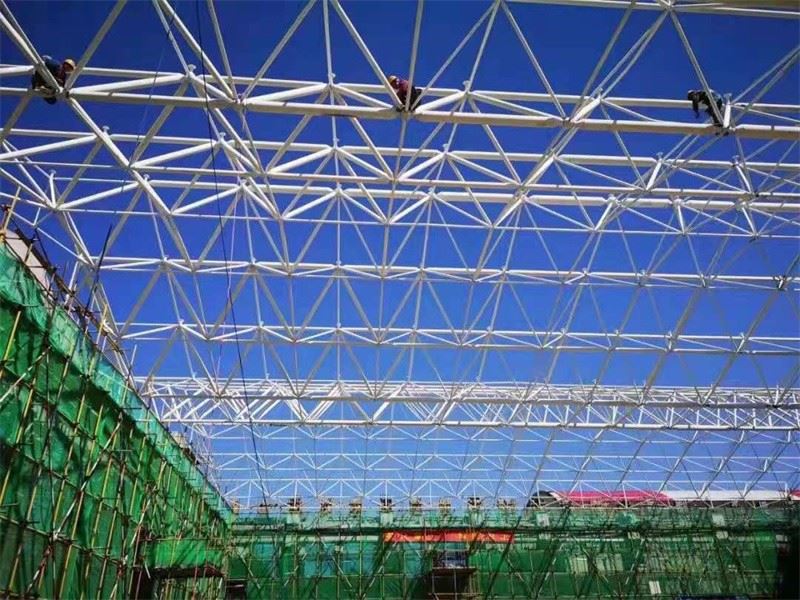
Hey there! As a bolt ball grid structure supplier, I've seen firsthand the importance of choosing the right foundation type for these structures. Bolt ball grid structures are super versatile and can be used in all sorts of buildings, from churches to stations and office buildings. For instance, you can check out some examples like Steel Structure Bolt Ball Grid Church, Steel Structure Bolt Ball Grid Station, and Steel Structure Bolt Ball Grid Office Building.
Let's dive into the common foundation types for bolt ball grid structures.
Independent Foundation
Independent foundations are like the go - to choice for a lot of bolt ball grid structures. They're pretty straightforward. Each column of the bolt ball grid structure gets its own little foundation. Think of it as each leg of a table having its own support.
The advantage of an independent foundation is that it's cost - effective. You don't need to pour a huge slab of concrete for the whole structure. It's also great when the soil conditions are relatively good. If the soil can bear the load of each individual column without too much trouble, independent foundations work like a charm.
However, they do have their limitations. If the soil is uneven or has low bearing capacity, independent foundations might not be the best option. In such cases, the columns could settle at different rates, which can cause problems for the whole structure.
Strip Foundation
Strip foundations are a bit different. Instead of having separate foundations for each column, they're like long, continuous strips of concrete. They run along the lines where the columns are placed.
This type of foundation is good when the columns are closely spaced. It distributes the load more evenly over a larger area of the soil. If you have a bolt ball grid structure where the columns are in a row or a grid pattern that's relatively tight, a strip foundation can be a great choice.
One drawback is that it requires more concrete than an independent foundation. So, if cost is a major concern and the column spacing allows for it, you might want to think twice about a strip foundation.
Raft Foundation
Raft foundations are like a big, flat slab that covers the entire area under the bolt ball grid structure. It's like putting the whole structure on a giant floating platform.
This is a great option when the soil has very low bearing capacity. The large area of the raft foundation spreads the load of the structure over a wide area, reducing the pressure on the soil. It also helps to prevent differential settlement, which is when different parts of the structure sink at different rates.
But, raft foundations are expensive. You need a large amount of concrete and reinforcement. And the construction process is more complex compared to independent or strip foundations. So, it's usually only used when there's no other choice due to poor soil conditions.
Pile Foundation
Piles are long, slender columns that are driven or drilled into the ground. They transfer the load of the bolt ball grid structure down to a deeper, more stable layer of soil or rock.
Pile foundations are used when the upper layers of soil are very weak or when there are large loads to be supported. For example, if you're building a tall bolt ball grid structure in an area with soft soil, piles can provide the necessary support.
There are different types of piles, like driven piles and bored piles. Driven piles are hammered into the ground, while bored piles are created by drilling a hole and then filling it with concrete. Each type has its own advantages and disadvantages in terms of cost, installation time, and suitability for different soil conditions.
Choosing the Right Foundation Type
So, how do you choose the right foundation type for your bolt ball grid structure? Well, it all comes down to a few key factors.
First off, soil conditions are crucial. You need to do a soil test to find out how strong the soil is and what its properties are. If the soil has high bearing capacity and is relatively uniform, you can probably get away with an independent or strip foundation. But if the soil is weak or uneven, you might need a raft or pile foundation.
The size and shape of the bolt ball grid structure also matter. A small, single - story structure might not need as heavy - duty a foundation as a large, multi - story building. And if the columns are spaced far apart, an independent foundation could be the way to go, while a closely - spaced column layout might call for a strip foundation.
Cost is always a consideration. You want to get the most bang for your buck. Sometimes, a more expensive foundation like a raft or pile foundation is necessary for the safety and stability of the structure. But in other cases, you can save money by choosing a simpler foundation type.
Our Experience as a Supplier
As a bolt ball grid structure supplier, we've worked on all sorts of projects. We've seen the different foundation types in action and know how important it is to get the foundation right.
We always recommend that our clients consult with a geotechnical engineer before deciding on a foundation type. An engineer can do a proper soil analysis and give expert advice based on the specific requirements of the project.

We've also helped clients who were on a tight budget. In some cases, we've been able to suggest modifications to the structure design or foundation type that saved them money without sacrificing safety.
Conclusion
Choosing the right foundation type for a bolt ball grid structure is a crucial decision. Whether it's an independent, strip, raft, or pile foundation, each has its own pros and cons. It all depends on the soil conditions, the size and shape of the structure, and your budget.
If you're planning a project that involves a bolt ball grid structure, don't hesitate to reach out to us. We have the expertise and experience to help you make the right choices. Whether it's about the foundation type or the structure design itself, we're here to assist you every step of the way. Let's work together to create a safe, reliable, and cost - effective bolt ball grid structure for your needs.
References
- Building Construction Handbook. McGraw - Hill.
- Geotechnical Engineering Principles and Practices. Pearson.
Send Inquiry